Grown on the volcanic slopes of Mauna Loa at 600–900 meters — why Kona coffee commands extraordinary prices and delivers extraordinary cups.
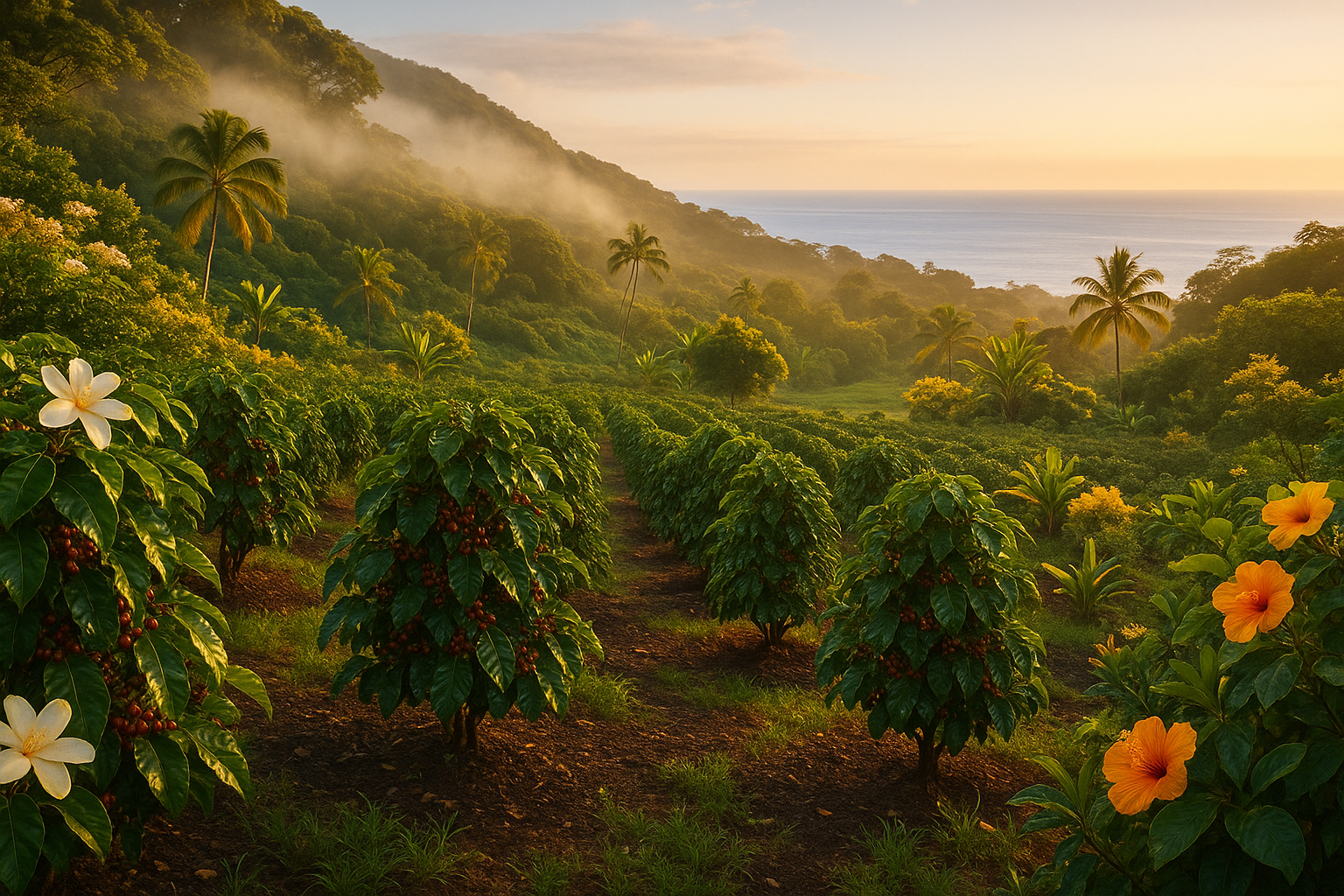
The Kona coffee district occupies a narrow strip of land on the western slope of Mauna Loa volcano on Hawaii's Big Island — roughly 30 miles long and two miles wide. This microclimate is almost impossibly specific: warm mornings for photosynthesis, afternoon cloud cover and light rain for moisture, cool evenings to slow maturation. The volcanic soil is young, mineral-rich, and drains perfectly. Nothing about this geography was engineered for coffee. It simply happened to be perfect.
Kona coffee has been produced commercially since the 1820s. Its history is tangled with Hawaii's agricultural and social story — from the plantation era through Japanese-American family farms in the mid-20th century to today's small holdings, many of which are under five acres. The farms are tiny by global standards, and the labor costs of harvesting on steep volcanic slopes are extraordinarily high. This is why Kona coffee is expensive, and why so much of what is sold as "Kona blend" in global supermarkets contains as little as 10% actual Kona beans.
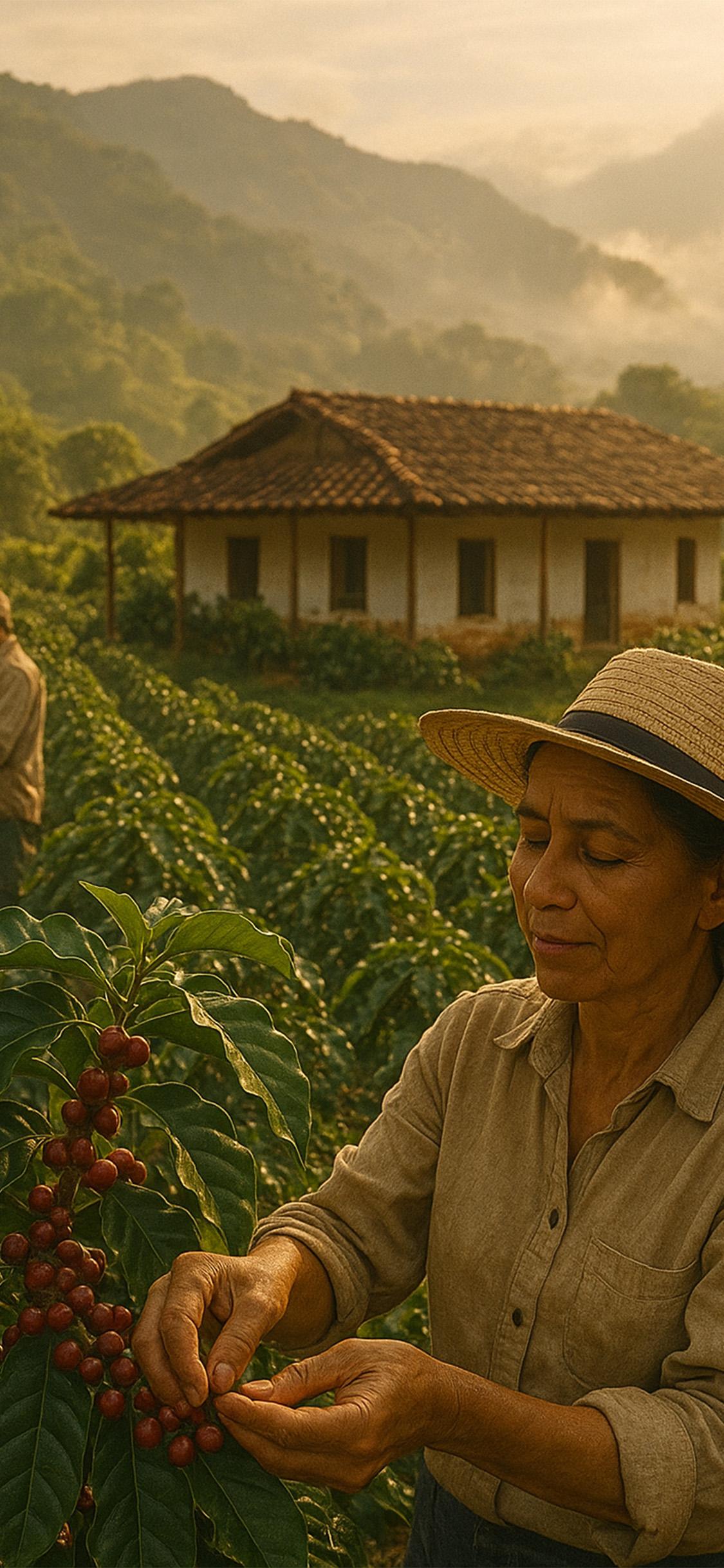
The Coffee Power Kona Elite is 100% authentic Kona, sourced directly from a family farm at the upper end of the district's elevation range. The Kona Typica variety — a descendant of the original Bourbon introductions of the 19th century — produces a cup of remarkable smoothness and richness. Macadamia nut sweetness, vanilla warmth, milk chocolate body, and caramel finish. The acidity is so gentle that even those who think they don't like coffee acidity will find nothing to resist.
This is the coffee that American royalty once drank exclusively. It remains extraordinary. We limit our allocation to 30 kilograms per harvest to ensure we can maintain the direct relationship with the family that produces it.